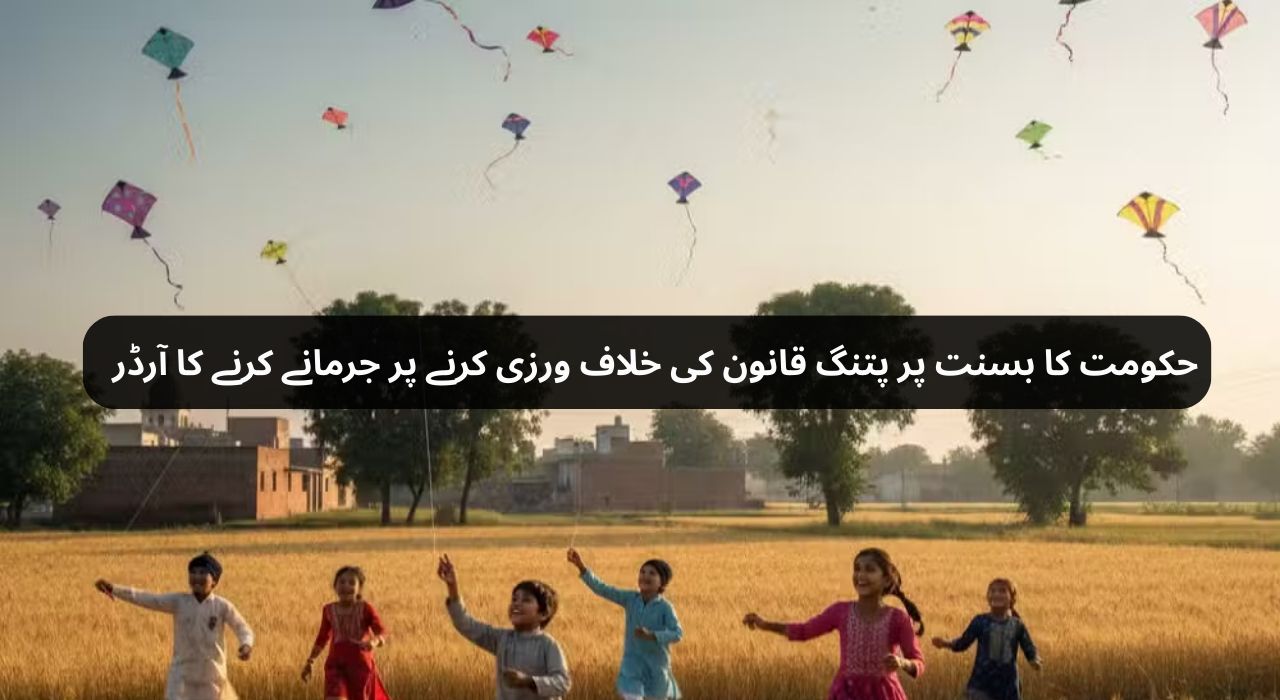
The Punjab government has taken strict action to control unsafe kite flying during Basant and other occasions. Under the new Punjab Regulation of Kite Flying Ordinance 2025, children who break kite flying laws will face legal action, and their parents may also be held responsible.
The government says the move is aimed at protecting public safety, as illegal kite flying and the use of dangerous string have caused serious injuries and deaths in the past.
Children to Be Tried Under Juvenile Law
According to the ordinance, if a child is caught violating kite flying rules, the case will be handled under the Juvenile Justice System Act 2018. This ensures that children are treated according to child protection laws while still being held accountable.
If a child cannot pay the fine, the responsibility will fall on their parents or legal guardians.
Fine Structure Under the New Ordinance
Below is a clear overview of the penalties introduced by the Punjab government:
| Violation Type | Fine Amount |
|---|---|
| First offence | Rs. 50,000 |
| Repeat offence | Rs. 100,000 |
| If child cannot pay | Recovered from parents or guardians |
Rewards for Whistle-Blowers
To encourage public cooperation, the ordinance also includes rewards for whistle-blowers. People who provide credible and useful information about kite law violations can receive a reward of up to Rs. 5,000.
However, no reward will be given if:
- The information is already known to authorities
- The tip is found to be false or useless
The final approval for rewards will be given by the Deputy Commissioner.
Where Kite Flying Is Allowed
The law clearly bans kite flying across Punjab, except:
- At designated locations
- On approved dates
- Under a regulated framework
Only registered kite manufacturers, sellers, traders, and kite flying associations are allowed to operate legally.
Powers Given to Deputy Commissioners
Deputy commissioners have been given strong authority under this law. They can:
- Cancel registrations of kite sellers or associations
- Take legal action against violators
- Enforce fines and restrictions strictly
The government believes this will improve enforcement at the local level.
Frequently Asked Questions (FAQs)
1. Can children be arrested for kite flying?
Children will not be treated like adult criminals. Their cases will be handled under the Juvenile Justice System Act 2018, which focuses on child protection and rehabilitation.
2. Who pays the fine if a child breaks the law?
If the child cannot pay, the fine will be recovered from parents or guardians.
3. Is kite flying completely banned in Punjab?
No. Kite flying is allowed only at approved places and dates under strict rules.
4. Can anyone report illegal kite flying?
Yes. Anyone can report violations, and credible whistle-blowers may receive a reward.
5. What happens to unregistered kite sellers?
Unregistered sellers and manufacturers can face cancellation of business and legal action.
Conclusion
The Punjab government’s new kite flying ordinance sends a strong message about public safety and responsibility. By involving parents, regulating sellers, and offering rewards for reporting violations, the government aims to reduce accidents linked to dangerous kite flying.
While Basant remains a cultural tradition, the authorities want it celebrated in a safe, legal, and responsible way. Cooperation from citizens, parents, and businesses will be key to making this law effective.

Rana Shahriyar is a dedicated content writer and contributor at 8171 Rashan Program. With a strong interest in social welfare programs and government initiatives, his work focuses on delivering clear, reliable, and easy to understand information for the public.