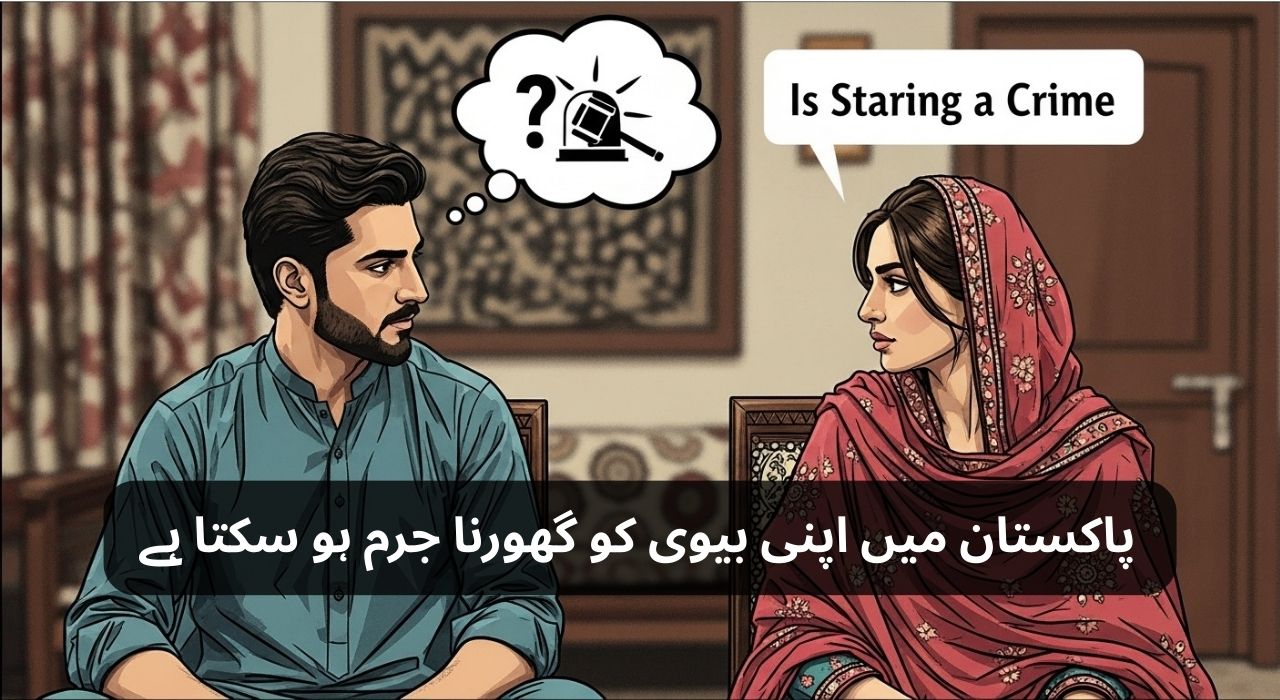
Introduction
In early 2026, Pakistan’s Parliament passed a new law called the Domestic Violence Act 2026. This law is meant to protect people living together in a home from many kinds of harmful behavior. For the first time, it says that certain actions inside a family, including how family members treat each other emotionally and mentally, can be punishable under the law.
Key Points Table
| What the Law Says | Explanation |
|---|---|
| Staring with harmful intent | If someone looks at their spouse in a way that scares them or is meant to harm their feelings, it can be punishable. |
| Threats (like divorce) | Threatening divorce or a second marriage to control someone is also a crime. |
| Emotional or psychological abuse | Words or behaviors that harm mental well-being now count as abuse. |
| Punishment | Up to 3 years in jail and/or a fine up to Rs100,000. |
What This Means
Simply looking at your wife normally at home is not a crime. But if the law says the looking was meant to threaten, scare, hurt, or emotionally abuse her, it could be considered part of domestic abuse.
This law currently applies in Islamabad (the federal capital) but similar rules may spread to other areas later.
FAQs (Common Questions)
Q: Is it illegal to look at my wife at home?
A: No. Ordinary looking is not illegal. It must be harmful or intimidating behavior as defined in the law.
Q: What kind of stare can be a crime?
A: The law says if the stare is meant to scare, threaten, or emotionally hurt someone, it may be punishable.
Q: Does this apply across Pakistan?
A: Right now it is for Islamabad, but other provinces may make similar laws.
Conclusion
In Pakistan’s new Domestic Violence Act, certain harmful behaviors inside the home are crimes. Staring at a spouse with bad intent and other forms of emotional abuse are now treated seriously. But normal, everyday looking or eye contact in a relationship is not a crime.

Rana Shahriyar is a dedicated content writer and contributor at 8171 Rashan Program. With a strong interest in social welfare programs and government initiatives, his work focuses on delivering clear, reliable, and easy to understand information for the public.