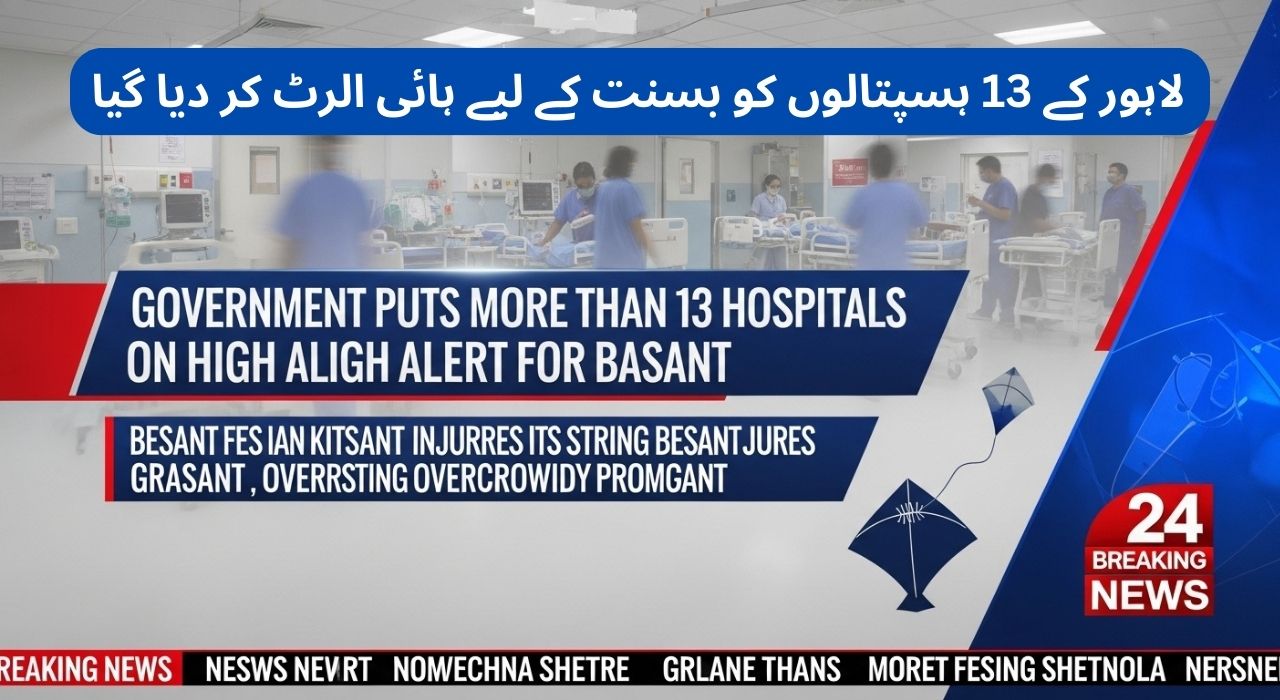
The Punjab Health Department has taken preventive measures ahead of the Basant festival by placing 13 government hospitals in Lahore on high alert from February 6 to 8. The goal is to ensure quick medical response and keep festival-goers safe during the celebrations.
Hospital authorities have been instructed to make sure all medical, nursing, and paramedical staff are available. Medicines, drips, vaccines, and surgical equipment must be ready at all times. Blood bags should be stocked, and lists of voluntary blood donors should be prepared in case of emergencies.
Special beds will be reserved for festival-related emergencies, and important diagnostic machines such as X-ray, ultrasound, CT scan, and MRI devices must remain fully operational. Hospitals are also required to keep mobile and landline connections active so that help can be coordinated quickly.
Hospital administrations must submit detailed preparedness plans to the Punjab Health Department. These steps are aimed at providing timely medical support and reducing risks during Basant, a festival known for kite flying and crowded celebrations.
FAQs
| Question | Answer |
|---|---|
| Why are hospitals on high alert during Basant? | Basant celebrations can lead to accidents and injuries, so hospitals need to be ready for emergencies. |
| How many hospitals are affected? | 13 government hospitals in Lahore are on high alert. |
| What preparations have been made? | Hospitals will have full staff, medicines, surgical equipment, blood bags, and diagnostic machines ready. |
| Are special beds allocated? | Yes, beds are reserved specifically for festival-related emergencies. |
| How will hospitals communicate during emergencies? | Mobile and landline connections will be kept active at all times. |
Conclusion
The Punjab Health Department’s measures aim to make sure that anyone injured during Basant can get immediate medical attention. With fully staffed hospitals, ready equipment, and emergency plans in place, authorities hope to make the festival safer for everyone.

Rana Shahriyar is a dedicated content writer and contributor at 8171 Rashan Program. With a strong interest in social welfare programs and government initiatives, his work focuses on delivering clear, reliable, and easy to understand information for the public.