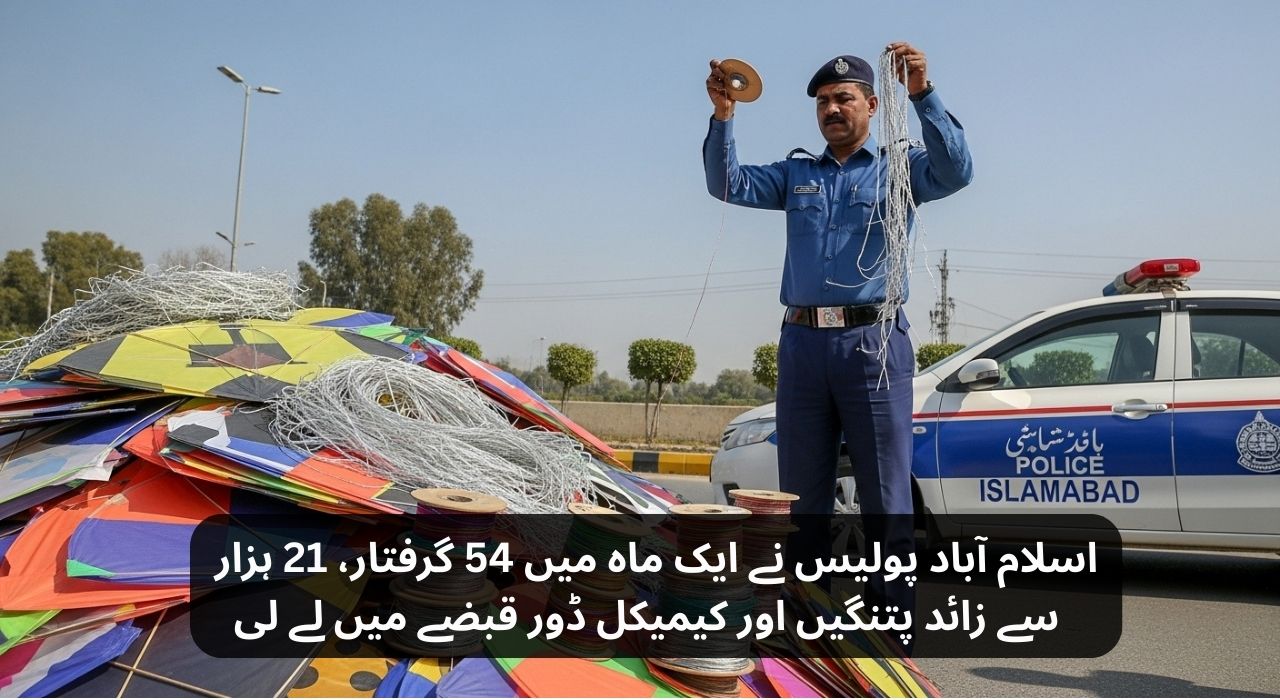
Islamabad police have launched a strong crackdown against illegal kite-flying and trading across the capital. In just one month, police arrested more than 54 people and seized over 21,000 kites along with chemical strings, officials confirmed.
Kite-flying, often seen as a seasonal activity, has caused serious injuries and deaths in Pakistan over the years. Due to growing safety concerns, the Basant festival was banned in Punjab in 2007 after multiple fatal incidents involving sharp chemical strings and reckless celebrations.
Police Raids and Recoveries
According to the Islamabad police spokesperson, police teams carried out multiple raids in different areas of the capital. During these operations, over 11,000 kites and more than 10,000 rolls of chemical strings were recovered. Charkis and other kite-flying equipment were also seized.
Cases have been registered against all suspects involved in kite-flying and kite trade.
Officials Warn of Deadly Consequences
Senior Superintendent of Police Qazi Ali Raza stressed that kite-flying is not a harmless activity. He said sharp chemical strings are extremely dangerous and have caused severe injuries, especially to motorcyclists, pedestrians, and children.
He warned that these strings can lead to permanent disability or even death. SSP Raza also urged parents to guide their children and explain the legal and safety risks involved.
Zero Tolerance Policy in Islamabad
Islamabad police have clearly stated that they are following a zero tolerance policy against kite-flying, kite selling, and the use of chemical strings. Awareness campaigns are also being conducted to educate the public.
Citizens have been asked to report violations through the emergency helpline Pucar-15 or at their nearest police station.
Regional Context and Recent Seizures
This crackdown comes at a time when Lahore is preparing for a three-day Basant festival starting February 6. The Punjab government recently lifted the 18-year ban on the festival, allowing it under strict safety regulations.
Meanwhile, Rawalpindi police also took action and seized a mini-truck carrying 20,000 kites and 100 rolls of string. The supplier was arrested, as kite-flying remains banned in the garrison city.
Key Highlights at a Glance
| Category | Details |
|---|---|
| Arrests Made | 54 people arrested |
| Kites Seized | Over 21,000 kites |
| Chemical Strings | More than 10,000 rolls |
| Policy | Zero tolerance against kite-flying |
| Reporting Helpline | Pucar-15 |
| Basant Status | Allowed in Lahore with restrictions |
Frequently Asked Questions (FAQs)
Why is kite-flying banned in Islamabad?
Kite-flying is banned due to serious safety risks, especially from chemical strings that can cause fatal injuries.
What are chemical strings?
Chemical strings are coated with glass or metal particles, making them sharp enough to cut skin, wires, and even throats.
What action is taken against violators?
Police arrest offenders, seize equipment, and register legal cases against them.
Is Basant allowed anywhere in Pakistan?
Basant has been allowed in Lahore under strict rules, but it remains banned in Islamabad and Rawalpindi.
How can citizens report kite-flying?
People can report violations by calling Pucar-15 or visiting the nearest police station.
Conclusion
Islamabad police are taking firm action to protect public safety by cracking down on illegal kite-flying. Authorities have made it clear that the risks are real and the law will be enforced strictly. While cultural traditions are important, human life comes first. Public cooperation and awareness are key to preventing tragic accidents and keeping cities safe.

Rana Shahriyar is a dedicated content writer and contributor at 8171 Rashan Program. With a strong interest in social welfare programs and government initiatives, his work focuses on delivering clear, reliable, and easy to understand information for the public.