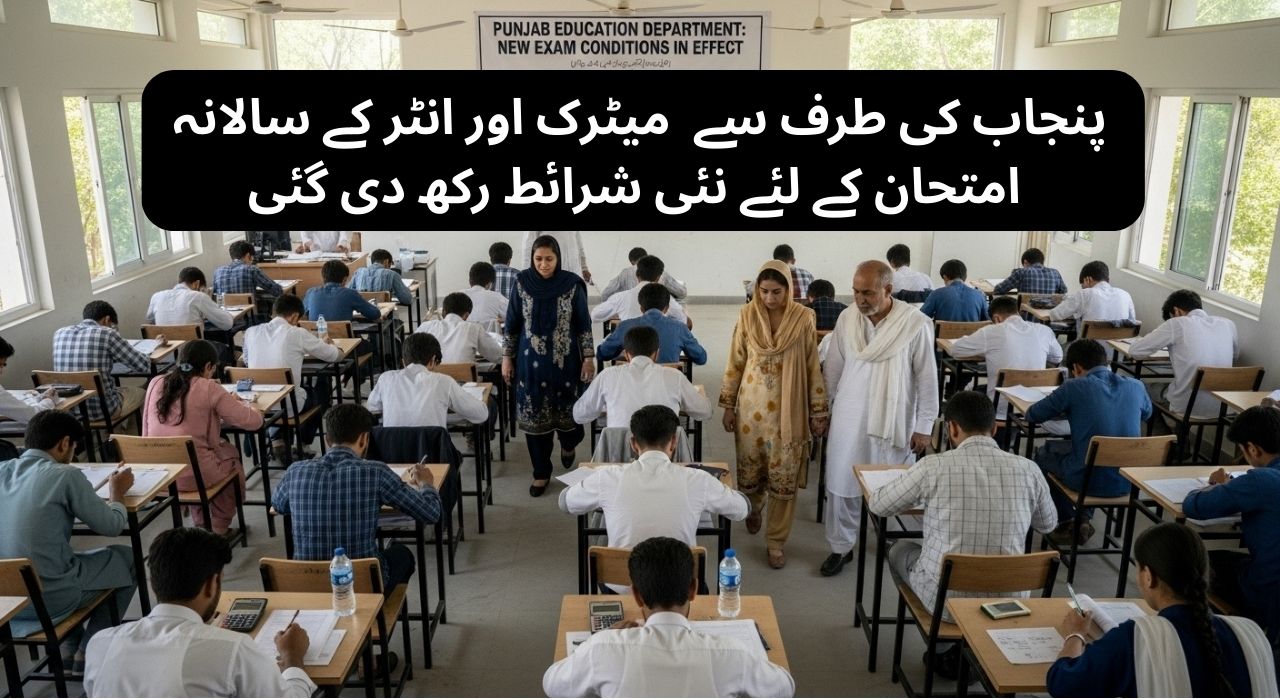
Punjab’s education authorities have announced major changes for the Matric and Intermediate annual examinations starting from 2026. The reforms aim to make board exams more transparent, fair, and secure for students across the province.
The decision was reviewed in a high-level meeting held at the Board of Intermediate and Secondary Education (BISE) Lahore. The meeting focused on modernising the examination system and addressing long-standing complaints related to cheating, fake candidates, and unfair marking.
The session was chaired by Muzammil Mehmood, Chairman of the Task Force Committee on Boards. Senior officials from the Higher Education Department and all nine examination boards of Punjab were present.
Biometric Verification for Students
One of the most important changes is the introduction of digital biometric attendance verification. From 2026 onwards, students appearing in Matric and Inter exams will have their identity verified digitally at examination centres.
Officials said this system will ensure that only registered candidates are allowed to enter exam halls. Fake candidates and impersonation cases will be blocked completely through biometric checks.
Major Reforms in Practical Exams
Authorities also discussed reforms in the practical examination system, which has faced criticism for years. Complaints of favouritism, weak supervision, and unfair marking were openly acknowledged during the meeting.
Under the new plan, practical exams will be conducted with the same seriousness as theory papers. A standard marking system will be introduced to ensure equal assessment across all boards.
To further improve transparency, officials proposed installing CCTV cameras in laboratories during practical exams. This step is expected to reduce cheating, external pressure, and illegal recommendations.
Digital Marking and Better Pay for Staff
Another key proposal is the introduction of a digital marking system. Both theory and practical marks will be entered electronically, reducing manual work and the risk of tampering or clerical mistakes.
The meeting also discussed increasing salaries for examination staff and supervisors. Officials believe better compensation will help staff resist pressure and perform their duties honestly.
Zero-Tolerance Policy Against Corruption
Task Force Chairman Muzammil Mehmood clearly stated that the government will follow a zero-tolerance policy. Any individual found using bribery, political influence, or personal connections to manipulate exam results will face legal action.
Education officials said these reforms will benefit hardworking students who previously felt disadvantaged due to a lack of influence.
Lahore BISE spokesperson Tahir Javed confirmed that detailed technical guidelines and implementation plans will be shared with schools and exam centres well before the 2026 examination season.
Key Changes Introduced for 2026 Board Exams
| Reform Area | New Condition (2026 Onwards) |
|---|---|
| Student Entry | Biometric verification at exam centres |
| Fake Candidates | Completely blocked through digital checks |
| Practical Exams | Standardised marking and strict supervision |
| Monitoring | CCTV cameras in laboratories |
| Marking System | Digital entry for theory and practical marks |
| Exam Staff Pay | Proposed increase in compensation |
| Corruption Policy | Zero tolerance with legal action |
Frequently Asked Questions (FAQs)
1. When will biometric verification start?
Biometric verification will be implemented from the 2026 Matric and Intermediate annual exams.
2. Will biometric verification apply to all students?
Yes, all registered candidates appearing in Punjab board exams will go through biometric verification.
3. Why are practical exams being reformed?
Practical exams have faced complaints of unfair marking and weak oversight. The new system aims to ensure fairness and transparency.
4. How will CCTV cameras help?
CCTV monitoring will reduce cheating, external interference, and the use of recommendations during practical exams.
5. Will schools receive guidelines before implementation?
Yes, official guidelines and technical details will be shared well before the 2026 exam season.
Conclusion
Punjab’s decision to introduce biometric verification, digital marking, and stricter monitoring marks a major step toward fair and credible board examinations. These reforms are designed to protect genuine students, eliminate corruption, and restore trust in the examination system. If implemented effectively, the 2026 exam cycle could set a new standard for transparency and accountability in Punjab’s education boards.

Rana Shahriyar is a dedicated content writer and contributor at 8171 Rashan Program. With a strong interest in social welfare programs and government initiatives, his work focuses on delivering clear, reliable, and easy to understand information for the public.